
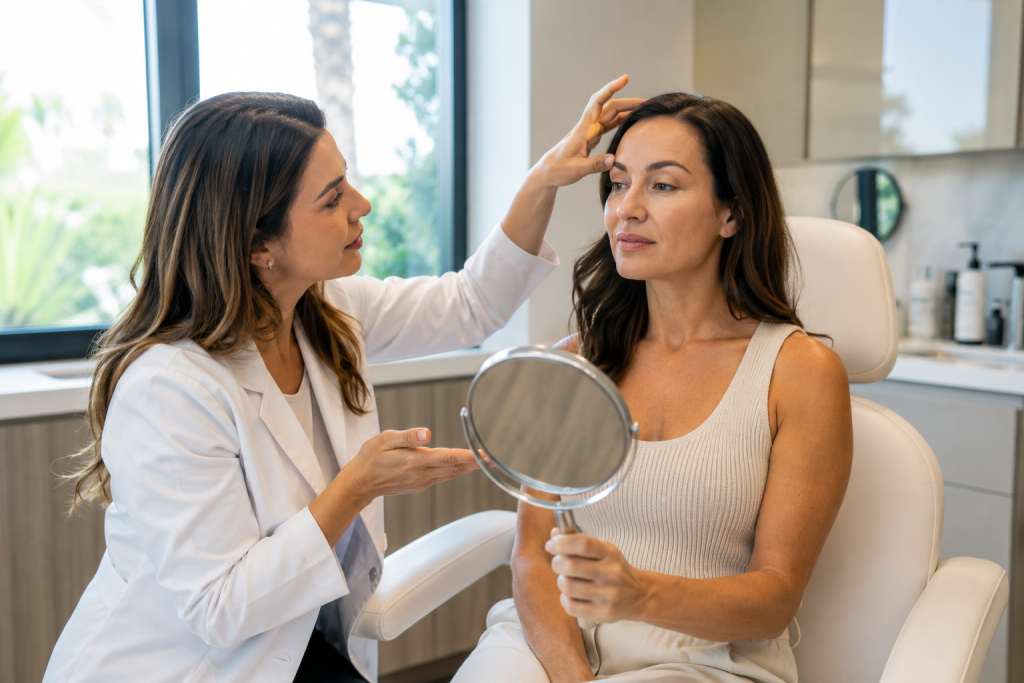
Skincare and Botox address different aspects of facial aging, so one is not universally better than the other. Daily skincare can support hydration, texture, tone, sun protection, and long-term skin health, while Botox temporarily relaxes targeted muscles to soften expression-related lines. For many people, the most effective approach is not choosing one over the other, but using each for the concerns it treats best.
ALCHEMĒ Medical Spa
At ALCHEMĒ Medical Spa La Jolla, we take a personalized approach to aesthetic care, offering professional skincare treatments and Botox services designed around your individual skin concerns and goals. From improving skin texture and overall complexion to softening the appearance of expression lines, our team can help create a customized treatment plan that supports natural-looking results.
We also offer special savings for new clients, including 20% off your first visit, $75 off your first service, or 20% off NAD therapy. Promotions and eligibility may vary, so we recommend confirming the current offer when scheduling your appointment.
Quick Takeaways
- Skincare generally improves hydration, texture, uneven tone, and overall skin health.
- Botox is designed primarily for expression-related wrinkles caused by repeated muscle movement.
- Botox results are temporary; the American Academy of Dermatology says effects commonly last about three to four months.
- Sunscreen and a consistent skincare routine remain important even if you receive Botox.
- Retinoids can help with mild fine lines, pigmentation irregularities, and texture, but they do not work by relaxing facial muscles.
- Skincare and Botox can complement each other because they target different contributors to visible aging.
What Is the Main Difference Between Skincare and Botox?
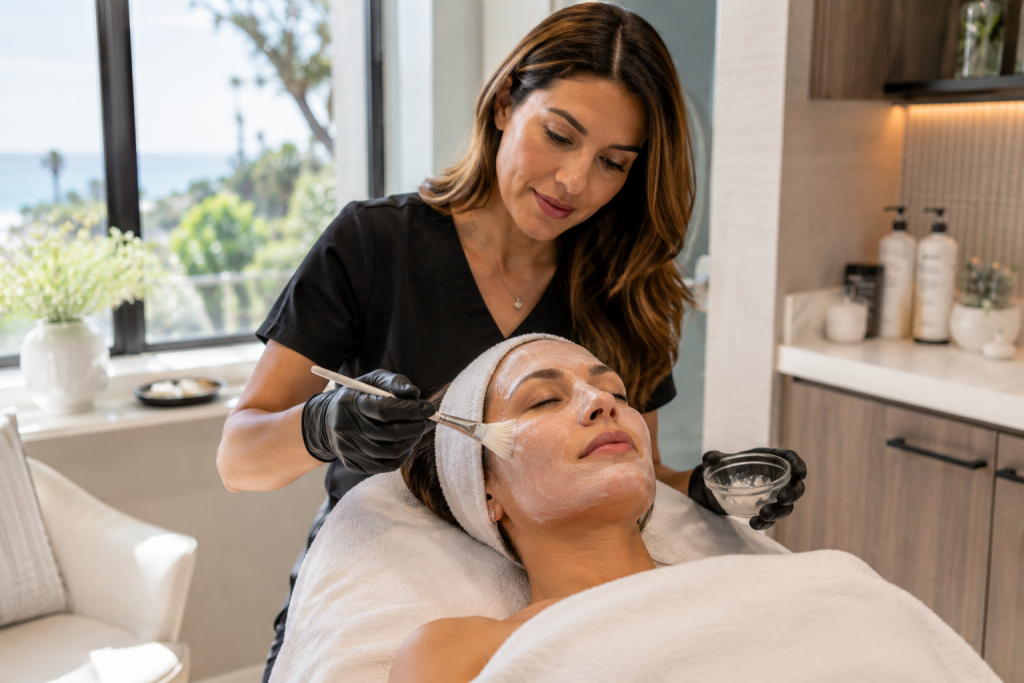
The main difference between skincare and Botox is what each approach targets. Skincare products work primarily at or within the skin to support concerns such as dryness, texture, pigmentation, and fine lines. Botox is an injectable treatment that temporarily reduces targeted muscle activity, which can soften wrinkles associated with repeated facial expressions.
That distinction matters because wrinkles do not all develop for the same reason. Some visible changes are influenced by sun exposure, collagen changes, dryness and pigmentation, while others become prominent after years of smiling, squinting, frowning or raising the eyebrows.
According to the American Academy of Dermatology, dermatologists may use several different approaches for sun-damaged skin, including moisturizers, prescription retinoids, Botox, chemical peels and resurfacing treatments. This is one reason a comprehensive anti-aging strategy may involve more than one treatment category.
| Concern | Skincare | Botox |
|---|---|---|
| Dryness | Often appropriate | Not designed to treat it |
| Uneven skin tone | Certain products may help | Not its primary purpose |
| Skin texture | Certain active ingredients may help | Limited direct effect |
| Mild fine lines | Retinoids and hydration may help | May help when lines are movement-related |
| Frown lines | Limited ability to address muscle movement | Common treatment target |
| Crow’s feet | May support surrounding skin quality | Common treatment target |
| Sun protection | Essential | Does not replace sunscreen |
| Ongoing maintenance | Daily | Periodic treatment |
What Can Skincare Do That Botox Cannot?
Skincare can address concerns that Botox is not intended to correct, including dryness, uneven pigmentation, sun protection, and aspects of skin texture. A well-designed routine can also support the skin barrier and help prevent avoidable signs of premature skin aging.
One of the most important examples is sunscreen. The American Academy of Dermatology recommends broad-spectrum SPF 30 or higher to help protect skin from ultraviolet damage and premature aging.
Active ingredients can provide additional benefits. Retinoids, for example, can increase surface-cell turnover and support collagen while helping improve fine lines, uneven pigmentation, and texture. However, they may not be appropriate for everyone and can cause irritation if introduced too aggressively.
Botox does not replace any of these functions. Someone who receives Botox still needs appropriate cleansing, moisturizing and sun protection.
What Can Botox Do That Skincare Cannot?
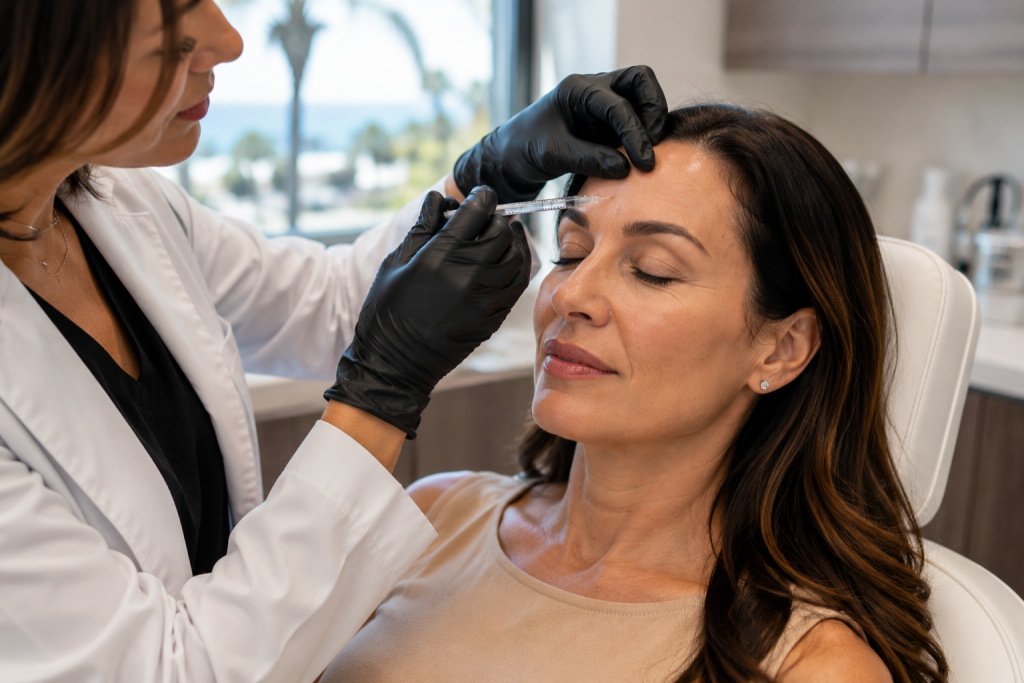
Botox can temporarily reduce the muscle activity responsible for certain expression-related wrinkles, something topical skincare cannot directly accomplish. This makes neuromodulator treatment particularly relevant when lines become noticeable during frowning, squinting or other repeated facial movements.
The American Academy of Dermatology explains that practitioners inject small amounts of botulinum toxin into targeted muscles. By temporarily relaxing those muscles, the treatment can make associated lines and wrinkles less noticeable.
Common cosmetic treatment areas include frown lines and crow’s feet. The American Society of Plastic Surgeons also identifies forehead creases as a commonly treated area.
This does not mean Botox treats every wrinkle. Lines caused predominantly by sun damage, skin laxity, volume loss or changes in skin texture may require a different approach. A professional assessment can help identify the cause before choosing a treatment.
Is Skincare or Botox Better for Preventing Signs of Aging?
A consistent skincare routine—especially daily sun protection—is fundamental to preventing avoidable premature skin aging, while Botox may be considered when repeated muscle movement contributes to expression lines. The two approaches therefore play different preventive roles rather than serving as direct substitutes.
The American Academy of Dermatology emphasizes daily sunscreen, avoiding tanning and moisturizing as practical ways to reduce visible signs of premature aging.
Skincare also supports the entire complexion every day. Botox is much more targeted.
This distinction is useful for younger adults considering aesthetic treatment. Someone primarily concerned with maintaining healthy skin may benefit most from a strong daily routine. Someone already noticing persistent expression lines may want to discuss whether a neuromodulator is appropriate.
Age alone should not determine the decision. Skin condition, facial movement, goals, medical history and tolerance for ongoing treatment matter more.
Should You Use Skincare and Botox Together?
Skincare and Botox can complement each other because they address different factors involved in facial aging. Botox may soften targeted expression lines, while skincare continues supporting hydration, tone, texture and protection from environmental damage.
Think of the combination as two different jobs.
A well-designed skincare routine supports the skin’s quality and condition. Botox targets specific muscles responsible for certain facial lines. Neither completely replaces the other.
For example, someone bothered by forehead expression lines and uneven pigmentation may need different strategies for each concern. Botox might be considered for appropriate movement-related lines, while skincare or other professional treatments may address pigmentation and texture.
The exact combination should be individualized. Adding treatments just because they are available isn’t necessarily better; each part of the plan should have a clear purpose.
How Long Does Botox Last Compared With Skincare Results?
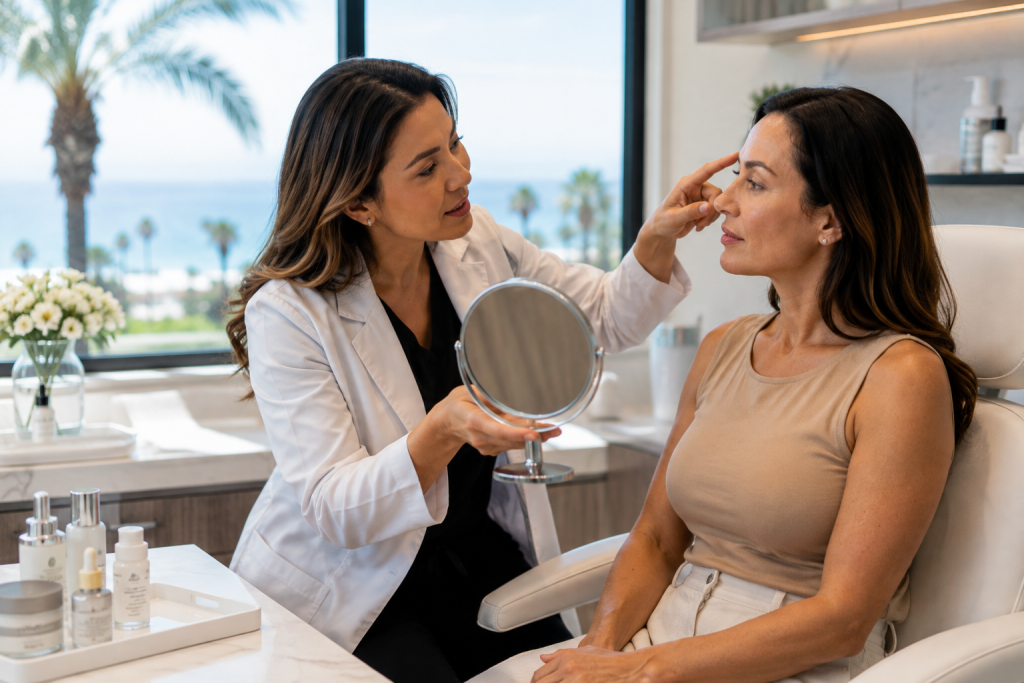
Botox typically produces temporary results that last about three to four months, although individual experiences vary. Skincare works differently: benefits generally depend on the product, active ingredient, concern and consistency of use, and maintaining results usually requires an ongoing routine.
The American Academy of Dermatology reports that many people begin noticing botulinum toxin results within three to seven days. ALCHEMĒ’s La Jolla Botox information similarly states that visible improvement may appear within several days, with fuller effects developing over roughly two weeks.
Skincare tends to be more gradual. Moisturizers may quickly make dehydrated skin appear smoother, while ingredients targeting pigmentation, texture or fine lines usually require consistent use over time.
This difference is important when setting expectations: Botox can produce a relatively defined treatment cycle, whereas skincare is an ongoing habit.
How Do You Decide Between Skincare and Botox?
Choose based on the specific problem you want to improve rather than simply asking which option is stronger. Skincare is usually the more logical starting point for dryness, uneven tone, texture and prevention, while Botox may be appropriate when expression-related wrinkles are the primary concern.
A simple decision guide can help:
| Your Main Goal | Approach to Consider |
| Protect skin from premature aging | Daily skincare and sunscreen |
| Improve dryness | Moisturizer and barrier-supportive skincare |
| Improve mild uneven pigmentation | Targeted skincare or professional skin treatments |
| Improve mild fine lines and texture | Retinoid-based skincare may be considered |
| Reduce prominent frown lines | Botox consultation |
| Reduce movement-related crow’s feet | Botox consultation |
| Improve multiple aging concerns | Combination plan |
| Unsure what is causing the concern | Professional consultation |
A consultation can be particularly helpful when a wrinkle remains visible even when your face is relaxed. Static lines may have several contributing factors, meaning muscle relaxation alone may not completely correct them.
Why Choose ALCHEMĒ Medical Spa La Jolla for Skincare and Botox?
At ALCHEMĒ Medical Spa La Jolla, we believe aesthetic care should be personalized to your skin, facial features, and individual goals. We offer Botox alongside professional facial and skin-rejuvenation treatments, allowing our team to address concerns such as expression lines, skin texture, pigmentation, and overall skin quality through a customized approach.
During your consultation, we take the time to understand what is contributing to your concerns. Whether Botox, professional skincare treatments, or a combination of approaches is appropriate, the goal is to create a treatment plan tailored to you rather than taking a one-size-fits-all approach.
Visit us at 909 Prospect Street, Suite 100C, La Jolla, CA 92037, to discuss your aesthetic goals with our team.
New clients may also qualify for introductory savings, including 20% off your first visit, $75 off your first service, or 20% off NAD therapy. Current offers, eligibility, and exclusions may vary, so please confirm promotion details when scheduling your appointment.
Frequently Asked Questions
Can skincare replace Botox?
Skincare generally cannot reproduce Botox’s mechanism of temporarily relaxing targeted facial muscles. However, effective skincare can address concerns Botox does not, including hydration, texture, pigmentation, and protection from ultraviolet damage. The better choice depends on what is causing the visible concern, not which option is more intensive.
Can Botox replace an anti-aging skincare routine?
No. Botox does not protect skin from UV radiation, moisturize the skin or directly address many pigmentation and texture concerns. Even after Botox, daily sun protection and appropriate skincare remain important for maintaining skin health and reducing preventable environmental damage.
How quickly does Botox start working?
Many patients begin seeing changes within several days. The American Academy of Dermatology reports that most people see results within approximately three to seven days, while ALCHEMĒ’s La Jolla information says fuller effects generally develop within about two weeks. Individual timing can vary.
Does Botox have downtime?
Botulinum toxin injections generally require little to no downtime. The American Academy of Dermatology says most patients can return to everyday activities immediately, although post-treatment precautions apply, including avoiding rubbing or massaging treated areas. Patients should follow the specific aftercare instructions their injector provides.
Is retinol better than Botox for wrinkles?
Retinol and Botox work differently. Retinol can support collagen, skin-cell turnover, texture and mild fine lines over time, while Botox temporarily relaxes targeted muscles responsible for certain expression wrinkles. Neither is automatically better; the right choice depends on whether skin quality, muscle movement, or both contribute to the lines.
At what age should you start Botox?
There is no universal age at which every adult should begin cosmetic Botox. Treatment should be based on individual facial anatomy, expression patterns, visible concerns, goals and medical suitability. Adults mainly concerned with prevention should also remember that sun protection and consistent skincare remain fundamental to healthy aging.
Build a Personalized Skincare and Botox Plan in La Jolla
The skincare vs Botox decision does not have to be either-or. Skincare supports the condition, appearance and protection of your skin, while Botox can target specific wrinkles associated with facial muscle movement. A personalized plan can determine whether you need skincare, professional skin treatments, Botox or a thoughtful combination.
If you’re ready to experience personalized, science-backed beauty and wellness, visit Alcheme MedSpa La Jolla location for your first treatment. Be sure to bring your coupon to show the receptionist and enjoy your introductory savings, whether you choose 20 percent off your first visit, 75 dollars off your first service, or 20 percent off NAD therapy. It’s the perfect time to start feeling and looking your best.
ALCHEMĒ Medical Spa La Jolla
909 Prospect St STE #100C La Jolla, CA 92037
(619) 335-2552