
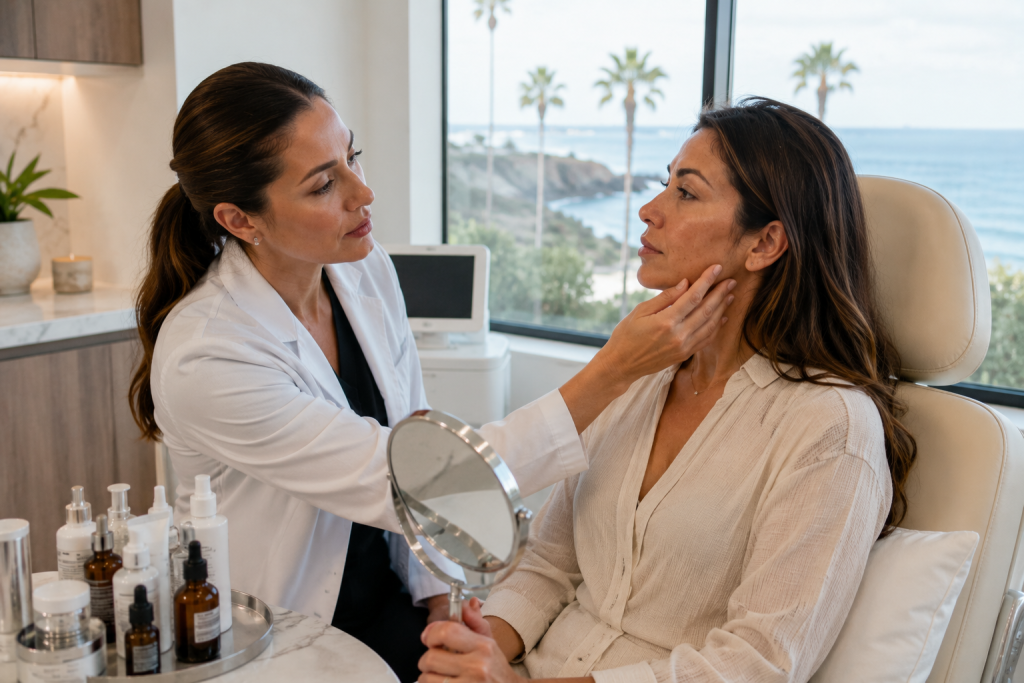
A professional facial vs home mask comparison comes down to your skin goals. At-home masks can provide convenient hydration, soothing, or targeted ingredient support, while professional facials typically combine multiple steps such as cleansing, exfoliation, customized products, and, when appropriate, extractions. Neither is universally better: home masks work well for routine maintenance, while professional care may offer greater customization and assessment.
ALCHEMĒ Medical Spa
ALCHEMĒ Medical Spa La Jolla provides personalized aesthetic care are designed to each patient’s skin concerns and goals. Our team offers advanced treatments for concerns such as fine lines, uneven skin texture, redness, and pigmentation, including IPL photofacial and RF microneedling. We begin with a personalized consultation to help determine which available treatment best fits your needs. New clients can currently receive a free personalized consultation plus $50 off, with exclusions applying.
Quick Takeaways
- At-home masks are convenient for hydration, soothing and occasional targeted skin care.
- Professional facials generally involve several customized steps rather than one topical product.
- A face mask should supplement—not replace—a consistent cleansing, moisturizing and sun-protection routine.
- Using the wrong mask or overusing exfoliating ingredients can cause dryness, irritation or breakouts.
- Professional assessment can be valuable when you are unsure which treatments or ingredients suit your skin.
- ALCHEMĒ Medical Spa La Jolla offers consultations and advanced aesthetic treatments, but you should verify whether a traditional facial is available before describing it as a service.
What Is the Difference Between a Professional Facial and a Home Mask?
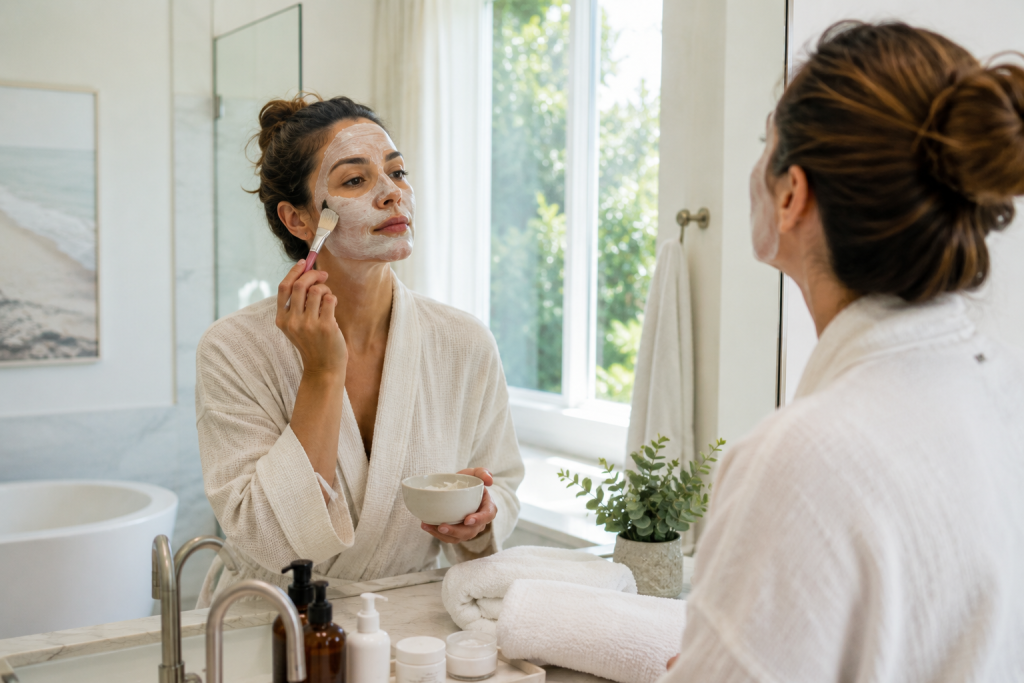
A professional facial is generally a multi-step skin treatment customized according to a person’s skin type and concerns, whereas an at-home mask is a single topical step performed independently. Professional facials may include cleansing, exfoliation, masks, moisturizing, massage, and sometimes extractions or targeted serums. Home masks usually focus on one or two goals, such as hydration, oil control or soothing.
Cleveland Clinic describes a standard facial as typically involving cleansing, exfoliation, a personalized mask, moisturizer, and facial or neck massage. Depending on the treatment and individual needs, it may also include steaming, extractions, and targeted serums.
That difference matters because professional treatment is not simply a more expensive version of putting on a face mask. The value is largely in the combination of treatment steps and the ability to adapt them to the person’s skin.
A home mask has a different role. According to the American Academy of Dermatology (AAD), facial masks can address certain concerns, including hydration and skin-barrier support, when you choose the right ingredients. However, masks should complement, not replace, a regular skincare routine.
Do At-Home Face Masks Actually Work?
Yes. At-home facial masks can temporarily support hydration, soothing, oil management, and other specific skin concerns when their ingredients match your skin’s needs. Dermatologists emphasize, however, that a mask is an addition to a good skin-care routine, not a substitute for daily cleansing, moisturizing, sun protection, or treatment for a diagnosed skin condition.
The AAD recommends choosing ingredients based on your skin concern. For example, hyaluronic acid, ceramides, and glycerin can be useful choices for dry skin, while salicylic acid, niacinamide, and certain clays may be appropriate for oily or acne-prone skin.
The key is choosing a mask based on its formulation rather than packaging, price or social-media popularity.
When Is a Professional Facial Better Than a Home Mask?
A professional facial may be a better choice when you want customized treatment, a professional skin assessment, several treatment steps in one appointment, or procedures such as appropriate extractions. A home mask may be sufficient when your goal is straightforward maintenance, such as adding hydration or soothing your skin between professional appointments.
Consider professional care when you:
- Are unsure whether your skin is dry, dehydrated, oily, or combination
- Have multiple concerns you want addressed at the same time
- Frequently experience irritation from products
- Want professional product or treatment recommendations
- Want deeper cleansing or professionally performed extractions when appropriate
- Are preparing for a special event and want a customized skin-care plan
However, persistent acne, rashes, eczema, unexplained irritation, or other possible medical skin conditions shouldn’t be treated with increasingly aggressive facials or masks. The AAD recommends working with a board-certified dermatologist when a skin problem requires diagnosis or medical treatment.
Professional Facial vs Home Mask: Which Should You Choose?
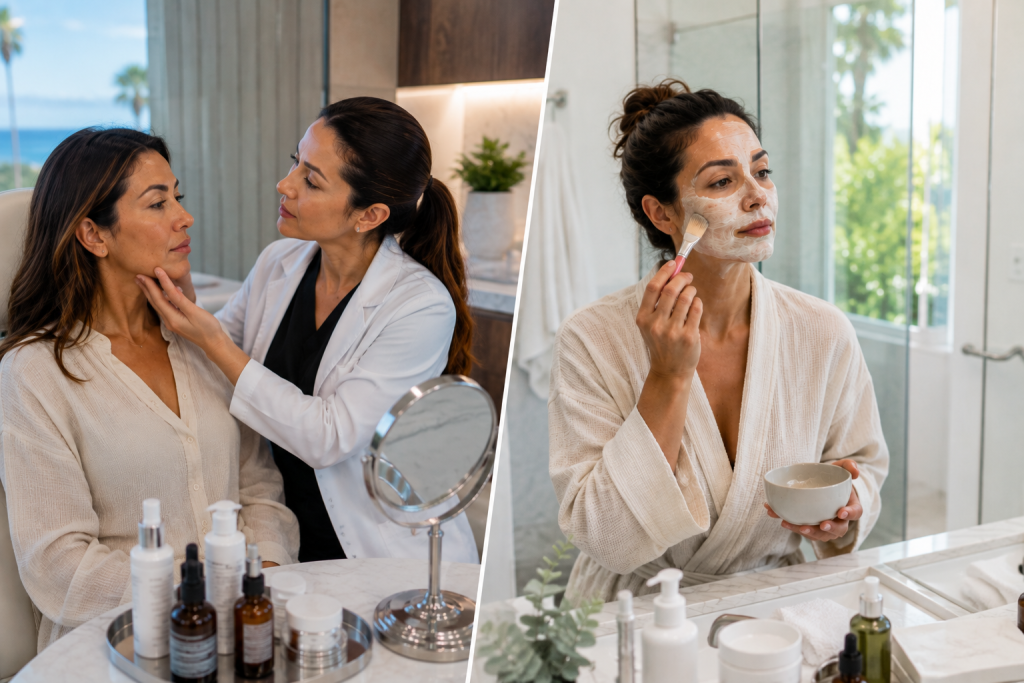
The better choice depends primarily on the complexity of your skin goals, your budget and how much customization you need. Home masks make sense for convenient routine maintenance, while professional facials can provide a more comprehensive experience. In many cases, the most practical strategy is not choosing one permanently, but using suitable home care alongside professional guidance when needed.
| Situation | Option to Consider |
|---|---|
| Occasional hydration | At-home hydrating mask |
| Simple self-care routine | At-home mask |
| Multiple skin concerns | Professional consultation/facial |
| Unsure which products suit your skin | Professional assessment |
| Blackheads requiring extraction | Professionally performed treatment |
| Maintaining results between appointments | Appropriate home skin care |
| Persistent or worsening skin condition | Board-certified dermatologist |
| More advanced aesthetic concerns | Professional aesthetic consultation |
Professional treatment also doesn’t eliminate the need for good home care. The strongest routine generally starts with basics like gentle cleansing, moisturizing, and sun protection, with masks or professional treatments added based on individual needs.
Can At-Home Masks Irritate Your Skin?
Yes. A facial mask can cause dryness, irritation, breakouts or an allergic reaction when its ingredients are inappropriate for your skin or when it is used too frequently. Exfoliating masks deserve particular caution because combining them with retinoids, acids or other exfoliating products already in your routine can increase irritation.
The AAD advises consumers to be cautious with potential irritants such as fragrance, essential oils, rubbing alcohol and harsh physical exfoliants. It also recommends testing a new mask on a small area and immediately washing it off if itching, burning or stinging develops.
More is not necessarily better. Leaving a mask on longer than directed or repeatedly layering products containing similar active ingredients can disrupt rather than improve your routine.
Cleveland Clinic also advises caution with acidic DIY ingredients such as lemon or lime juice and apple cider vinegar because they can irritate the skin.
Which Face Mask Ingredients Should You Look For?
Choose mask ingredients based on your specific concern rather than a supposedly universal formula. Hydrating ingredients such as hyaluronic acid, glycerin, and ceramides may suit dry skin, while ingredients such as salicylic acid, niacinamide, or clay may be useful in products formulated for oily or acne-prone skin.
For Dry or Dehydrated Skin
The AAD identifies ingredients such as hyaluronic acid, ceramides, and glycerin as options that can support hydration and the skin barrier.
For Oily or Acne-Prone Skin
Depending on your skin and existing routine, salicylic acid and other appropriate exfoliating acids can help address clogged pores, while niacinamide and clay are commonly used for oil-related concerns.
For Dull or Aging-Looking Skin
Ingredients such as vitamin C, certain alpha hydroxy acids, and peptides may be included in masks intended to address visible signs of aging or dullness.
Remember, an ingredient being beneficial does not automatically mean a stronger concentration or more frequent use will produce better results.
Can a Home Mask Replace Professional Skin Treatments?
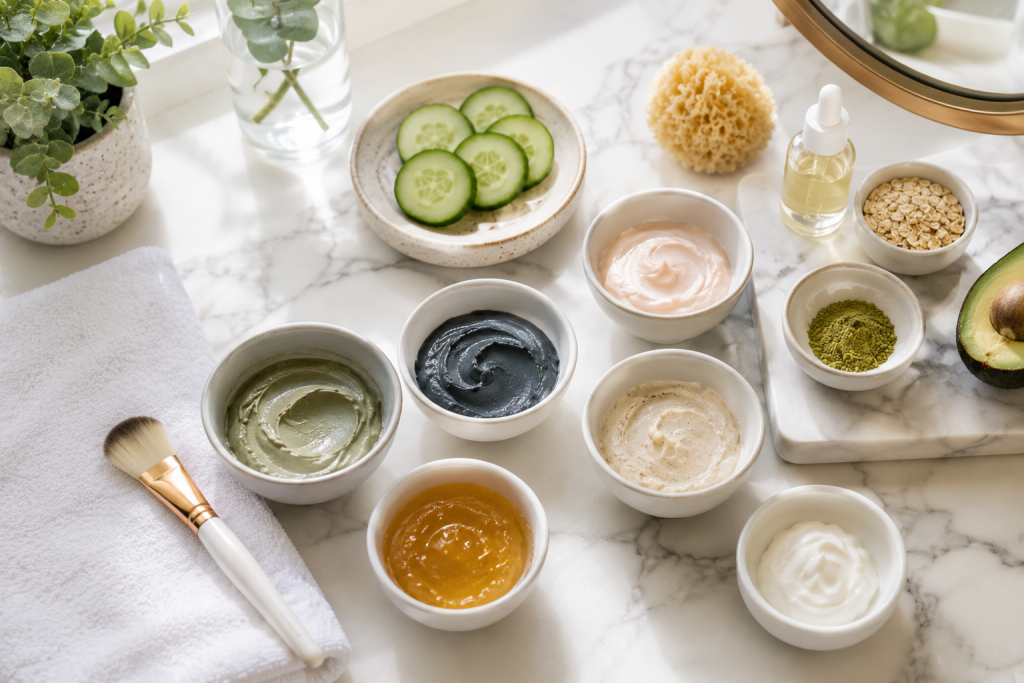
No. A home mask can be a useful part of skin maintenance, but it cannot reproduce every effect or function of a professional treatment. Masks primarily deliver topical ingredients, whereas professional aesthetic care may include controlled technologies or procedures selected for concerns such as pigmentation, texture, fine lines or skin laxity.
This distinction matters most when comparing masks with medical-aesthetic procedures.
For example, ALCHEMĒ Medical Spa La Jolla’s current website lists IPL photofacial for wrinkles and fine lines and RF microneedling among its aesthetic options. These treatments fall into different categories than an over-the-counter facial mask and shouldn’t be treated as interchangeable.
The right option depends on what you are trying to change. Someone looking for temporary hydration may not need an advanced treatment, while someone seeking improvement in more persistent texture or pigmentation concerns may benefit from discussing professional options.
How Often Should You Use an At-Home Face Mask?
No universal mask schedule exists because frequency depends on the product’s ingredients, formulation, your existing routine, and your skin’s tolerance. Follow the manufacturer’s directions rather than assuming that daily or prolonged use will deliver faster results. This is especially important with masks containing exfoliating ingredients.
The AAD warns that using certain masks too frequently or leaving them on longer than directed can cause irritation. It also recommends considering what is already in your skin-care routine before adding another active product.
For example, someone already using retinol or an exfoliating acid should be particularly cautious about adding an exfoliating mask.
Why Consider ALCHEMĒ Medical Spa La Jolla for Your Skin Goals?
ALCHEMĒ Medical Spa La Jolla provides personalized aesthetic treatment planning rather than relying on a one-size-fits-all approach. Its current website lists treatments for concerns such as wrinkles, fine lines, volume loss, and sagging and specifically identifies options including IPL photofacial, RF microneedling, dermal fillers, Sculptra, and Morpheus8.
The La Jolla location is listed at 909 Prospect St, Suite 100C, La Jolla, CA 92037. We encourage patients to start with a personalized consultation so the team can recommend treatments based on individual concerns.
Frequently Asked Questions
Is a professional facial worth the money?
A professional facial can be worthwhile if you value customized product selection, multiple treatment steps and professional assessment. Someone whose only goal is occasional hydration may be satisfied with an appropriate home mask. Value therefore depends on your concerns and expectations, not simply whether a professional treatment is inherently “better.”
Can I use face masks between professional treatments?
Yes, you can incorporate appropriate masks into a home-care routine between professional appointments. The product should complement, not conflict with, other treatments and active ingredients. If you recently had an aesthetic procedure, follow your provider’s aftercare instructions before adding masks, acids, retinoids or other potentially irritating products.
Are expensive face masks better?
Not necessarily. Price alone doesn’t determine whether a mask is appropriate or effective for your skin. Cleveland Clinic advises focusing on ingredients rather than assuming an expensive product will perform better. A simple formula with ingredients suited to your concern may be more useful than a costly mask with unnecessary or irritating ingredients.
Should I use a face mask before an important event?
A familiar hydrating or soothing mask may provide temporary hydration or a refreshed appearance before an event. Avoid experimenting with a strong new exfoliating mask right beforehand because it could cause unexpected redness or irritation. If planning professional treatment before an important occasion, discuss timing and possible downtime with your provider well in advance.
Can a face mask clear clogged pores?
Some masks formulated with ingredients such as salicylic acid or clay may help manage oil and clogged pores, but they may not resolve persistent comedonal or inflammatory acne. Some facial treatments may also include professional extractions. Evaluate persistent acne appropriately rather than repeatedly treating it with increasingly aggressive masks.
Can I leave a face mask on longer for better results?
No. Leaving a mask on longer than the instructions recommend does not necessarily improve results and may increase dryness or irritation. The AAD specifically recommends following label directions for application time and frequency. If a mask causes burning, itching, or stinging, wash it off rather than waiting for the recommended application time to end.
Find the Right Skin Treatment for Your Goals in La Jolla
Choosing between a professional facial vs home mask starts with understanding what you want to achieve. A suitable home mask can complement a consistent skin-care routine, while a professional assessment may be more valuable for complex concerns or when over-the-counter products aren’t delivering the desired improvement.
If you’re ready to experience personalized, science-backed beauty and wellness, visit Alcheme MedSpa La Jolla location for your first treatment. Be sure to bring your coupon to show the receptionist and enjoy your introductory savings, whether you choose 20 percent off your first visit, 75 dollars off your first service, or 20 percent off NAD therapy. It’s the perfect time to start feeling and looking your best.
ALCHEMĒ Medical Spa La Jolla
909 Prospect St STE #100C La Jolla, CA 92037
(619) 335-2552